As Heather Guo strolls through the streets of Manhattan in her burgundy qipao, passersby turn to look at her, as if she stepped out of a Wong Kar-wai film. Meticulously hand-sewn with gold and silver threads, her long silk qipao, a traditional Chinese robe dating back to the Qing Dynasty (1644-1912), is adorned with delicate floral patterns that seem to whisper stories of a bygone era. Wearing this robe today, she weaves together the contemporary charm of New York and the timeless allure of 1950s Shanghai.
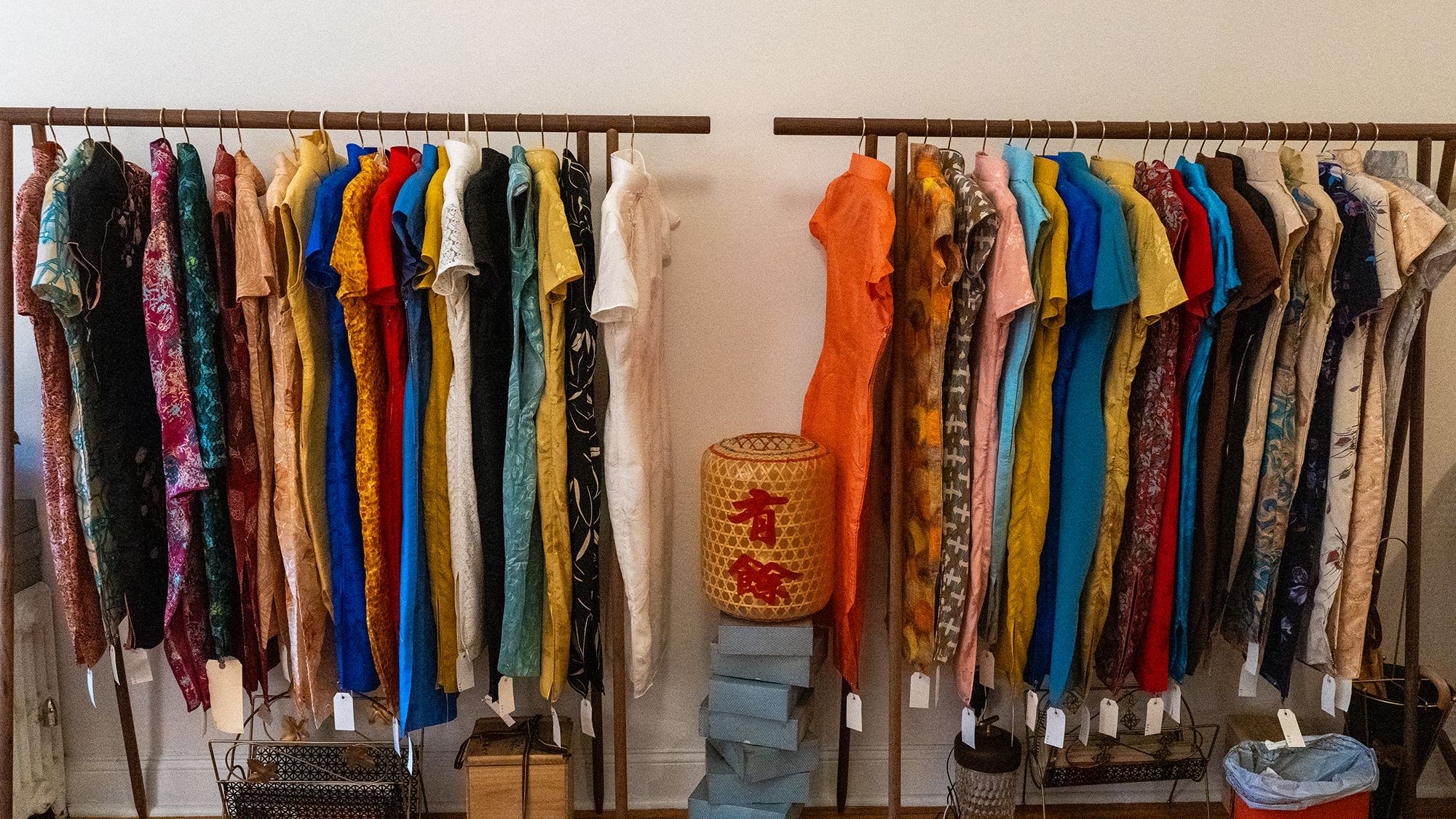
Guo, born in Shanghai and having moved to the United States at age 15, is a passionate collector of qipaos. She owns more than 300 qipaos from around the world, dating from the 1950s and 1960s, and recently opened her boutique, Xiangjiang Vintage, in New York’s West Village, drawing an Asian-American clientele with her vast catalogue of styles.
The qipao, also known as cheongsam in Cantonese, is often made of embroidered silk and characterized by high collars and straight lines. This robe has undergone many iterations over the centuries and has heavily influenced the global perception of Asian women.
The Evolution of the Qipao and Women’s Liberation
In the 1920s, as women were breaking free from Confucian social norms, qipao tailors adopted Western flapper styles, characterized by short hemlines and a fitted bodice. Antonia Finnane, professor of history at the University of Melbourne and author of “How to Make a Mao Suit: Clothing the People of Communist China, 1949-1976,” explains that “the qipao evolved from a boxy, looser style – initially linked to Manchu dress – to a sheath style in the 1930s. This transformation reflected the changing perception of women’s bodies, as they gained freedom and were no longer confined to traditional roles. They no longer needed to hide themselves in the voluminous clothing their mothers and grandmothers wore.”
The silhouette changed over time, but the qipao’s significance remained constant: women’s liberation and the evolution of self-perception. In the 1940s, the adoption of bras in Hong Kong and Taiwan further transformed the robe, with couturiers using darts to shape the bodice and accentuate the bust, according to Finnane. From 1949 until the 1970s, the qipao lost popularity, seen as a relic of outdated Chinese traditions at odds with modernization. People turned to more functional, Western-inspired clothing, such as jackets and trousers. However, amid the upheavals of the 1960s Cultural Revolution, many tailors found refuge in Hong Kong, where they blended traditional Chinese aesthetics with Western influences, allowing the robe to thrive in what was then a British colony.
The Commercialization and Appropriation of the Qipao
The qipao made its comeback in the fashion world in the 1990s and early 2000s when fast fashion brands capitalized on traditional Chinese prints and silhouettes. Brands like Forever 21 produced mandarin-collar shirts with machine-stitched dragons and Chinese characters that don’t form real sentences. In 2002, Abercrombie & Fitch faced criticism for selling T-shirts with racial slurs and imagery such as “Wong Brothers Laundry Service – Two Wongs Can Make It White.”
Although the qipao has been historically associated with the women’s liberation movement, reflecting changing perceptions of women’s bodies as they broke free from traditional roles, some brands ignored its rich history and the struggles of oppression endured by Chinese women. These companies often commercialized and fetishized traditional attire, ignoring its deeper meaning. In 2019, PrettyLittleThing’s collaboration with British group Little Mix received criticism from the API+ community for cultural appropriation of traditional Chinese attire. The collection, which featured crop tops and mini skirts with dragon motifs, was described as “oriental” by the brand.
The Importance of Awareness and Respect
Ruohan Song, a traditional Chinese fashion influencer and qipao collector, explains that Chinese women in the United States still face stereotyping and sexualization due to the way those who wear qipaos are portrayed in the media. Asian female characters who wear them are either perceived as intimidating (like the “Dragon Lady,” inspired by the villain from the comic Terry and the Pirates), as delicate and submissive, or as hypersexualized, reinforcing narrow and outdated stereotypes.
Song believes it’s important to understand that the perception of the qipao is deeply rooted in society, and it is not the fault of those who wear them. “Fetishization and appropriation are not desirable, but if, for example, I had an American friend who had studied the history of this robe and wanted to wear one with respect and understanding, I would find that perfectly acceptable. It’s important to approach this subject with respect and an informed attitude.”
Guo agrees that educating people about the garment’s historical and cultural significance is crucial to preventing cultural appropriation and misrepresentation. “Like the kimono in Japan, the qipao has also been used as a tool to sexualize and objectify women, perpetuating stereotypes. Misrepresentation diminishes the achievements of Asian women and makes them more vulnerable,” she says.
To encourage more women to appreciate the beauty of the traditional qipao, Guo works with a tailor in Shanghai to create new designs inspired by vintage styles for sale. Currently, her Manhattan boutique offers more than 30 styles, each available in seven sizes. “It’s not true that only slim women can wear a qipao. Almost everyone can find the perfect robe here,” Guo states.
For Guo, the qipao represents more than just a fashion statement. She sees it as a bridge to the past, connecting her to the women who wore these robes to make a statement. “I could feel their liberation as women, their struggles to challenge social norms, and their appreciation of their bodies and identities,” Guo explains. She believes that Hong Kong’s fashion history deserves more recognition, which is why she named her boutique “Xiangjiang Vintage” after the Mandarin term for the city.
Many fashion brands, both in China and the United States, are now embracing “modern Chinese style” by incorporating qipao-inspired buttons and high collars, but Guo believes it’s essential to stay true to traditional designs when crafting qipaos. Traditional qipao options in the United States are very limited, making it difficult to change the public perception of this robe, which is why she is committed to preserving her culture.
As Guo heads toward a café wearing her qipao, I wonder, as a Chinese woman living in the United States, if she has ever feared being “inexcusably Chinese” on the street, given the rise in hate crimes in recent years. “I feel liberated in a qipao,” Guo says. “By wearing it daily, I want to encourage more Chinese women to find their identity and sense of belonging through this robe. If I can proudly wear this robe, then we can move beyond anti-Chinese racism and find who we truly are.”